
Chinese New Year 2020 – The Year of the Rat
2020-01-24
Bartłomiej Magierowski
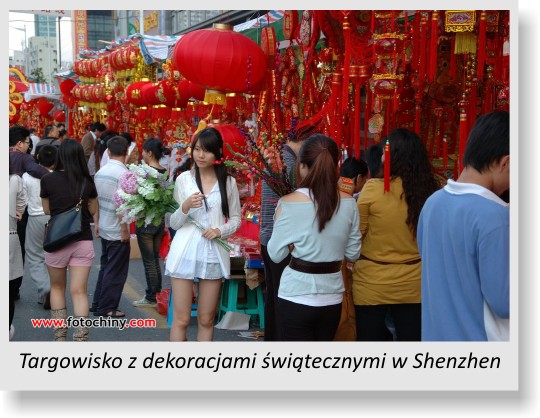 On January 25, 2020, the Year of the Rat will begin. It is the most important holiday in China, although not only there — according to the lunar calendar, the New Year is also celebrated in many other Asian countries. Millions of Chinese people around the world will also celebrate this day, especially the huge Chinese communities in Thailand, Malaysia, the United States, Canada and Australia. In Poland, to a greater or lesser extent, Chinese people will also celebrate the arrival of the Year of the Rat, for example at Confucius Institutes. The year 2020 will be the year of the Metal Rat, also known as the White Rat. This cycle repeats every 12 years, according to the legend of the 12 animals.
Are there New Year's Eve parties in China? Basically, no. It is not about dancing or entertainment, but rather about spending time with the closest family and enjoying a richly prepared table. Chinese New Year reminded me more of our Christmas than New Year's Eve. It is a very special period when the noise of huge cities becomes quieter, farmers leave the fields and put on their best clothes, schools and kindergartens become empty, and banks are closed for at least several days. The night before the New Year is very unique; at that time the Middle Kingdom resembles a machine that has shifted into neutral gear. Normally, this machine works at full speed, day and night, on Saturdays and Sundays, in rain, snow and heat — it does not matter. People, like small parts of this machine, are simply constantly busy and overworked. It is worth noting that Chinese people often have no holidays, and it is precisely during this period that they can finally rest from work and the daily rush.
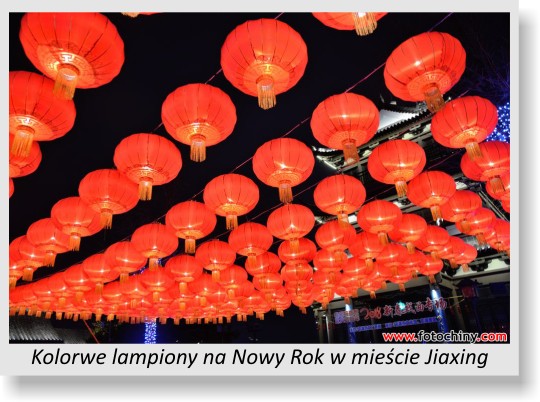 I would like to write that Chinese New Year will be celebrated with great celebrations, but in the Middle Kingdom fireworks have been completely banned! They were forbidden in the country that actually invented gunpowder, firecrackers and fireworks. The authorities decided that fireworks displays would only be possible during official events. The average Wang (the Chinese equivalent of "the average Joe") will not be allowed to set off any fireworks. It was a very important tradition, as it symbolically frightened away evil spirits, drove away the old year and welcomed the new one. Why was this tradition banned in China? First of all, it is connected with broadly understood safety concerns — accidents, but also access to such materials, which the authorities clearly want to restrict. It is also an environmental issue. It has long been known that many Chinese cities suffer from severely polluted air; smog affects many Chinese cities and towns almost throughout the entire year, and smoke from hundreds of thousands of firecrackers and fireworks can only make the situation worse. I should add that several years ago setting off firecrackers and fireworks was not limited to just one night, but sometimes continued for as long as two weeks.
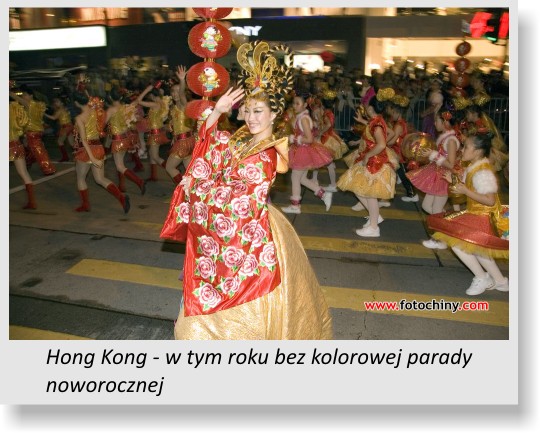 It is surprising that Hong Kong cancelled even the official fireworks display over Victoria Harbour. I remember that when I watched the show in Hong Kong for the first time in 2005, I was extremely impressed: skyscrapers 300–500 metres high illuminated by LEDs, spotlights and lasers, magnificent fireworks launched from the tops of towers, additional synchronized explosions from boats anchored in the bay, and all of this accompanied by modern and traditional music. This time, however, the authorities and police in Hong Kong decided that such a show would be too risky. The New Year's parade, which used to attract tens of thousands of tourists to Hong Kong, was also cancelled. The reason for this decision? Of course, it was connected with the protests of 2019, which completely destabilized the city.
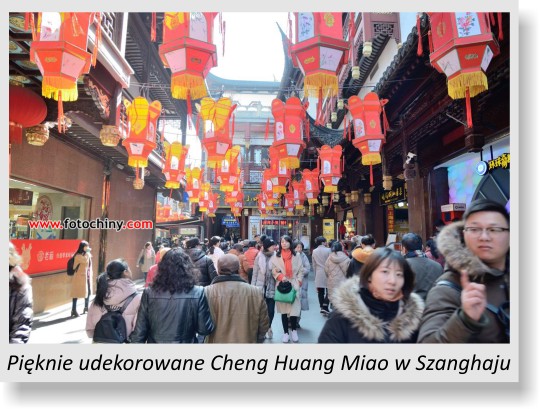 So how should Chinese New Year be celebrated? How will ordinary Chinese people spend this holiday? Many years ago, it was simply a festive dinner on New Year's Eve or a lunch on New Year's Day. Families were poorer then, life was modest, and this one special day of the year was a real feast. It reminds us of something, doesn't it? For us, Christmas was also simpler in the past; it was mainly about spending time with family, reflection and enjoying the unique flavours of holiday dishes. The Middle Kingdom became wealthy very quickly, and celebrating Chinese New Year has changed somewhat. More and more people use a week or even two weeks of free time to visit other countries. They often travel to Thailand, Malaysia or the Philippines, but more and more people can afford longer and more expensive journeys to the United States, France, Italy or Greece.
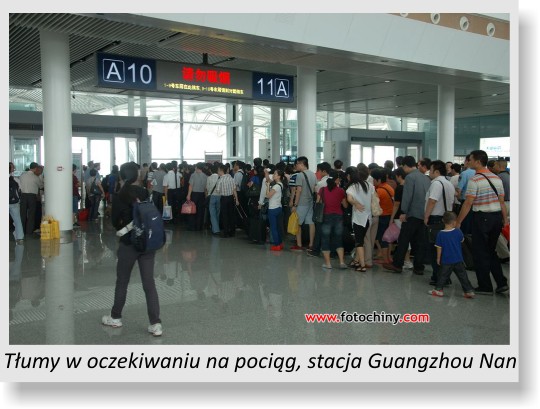
Yan Qiao Zhi, a 40-year-old Chinese woman, will travel abroad for the first time precisely during the holiday period. Together with her two children and husband, she will admire the landscapes of Thailand. Wealthy Li Xiao Feng, who manages a company offering dietary supplements and pharmaceutical machinery, plans to visit the United States and Canada with his wife and children. The trip will last around three weeks. Young Chinese people who remain in their homeland usually return to their hometowns, villages and small towns. A few years ago, cities such as Shenzhen and Guangzhou became almost empty because many people left during the holiday period. They came from outside Guangdong Province but worked in huge metropolitan areas that offered better jobs and much higher salaries. Nowadays, some people still leave such cities, but an equal number arrive to visit them or to see their children and grandchildren, who have already settled there permanently and own their own apartments and businesses. Of course, railway or airline tickets must be purchased well in advance, because the Chinese holiday period is the largest human migration in the world. Several years ago, the modern online railway ticket system would crash, or within just a few dozen seconds there would be no tickets left. It is not a good time to visit famous tourist attractions, unless you enjoy standing in long queues for hours and pushing through crowds.
 Before Chinese people meet with their families, annual company celebrations are organised. Above all, these are opportunities for fun and employee integration. In the past, they were simply lunches or dinners in restaurants. The company owner would then give employees symbolic red envelopes containing money. Today, corporations, as well as small and medium-sized companies, rent entire halls in hotels and restaurants. Employees prepare karaoke performances, dance shows and talent competitions. Companies invest in gifts that are given to employees and their families through prize lotteries. It is also a tradition that department managers and company owners personally hand red envelopes to their employees. Afterwards, there are still a few working days left, but everyone is already dreaming about the holiday break.
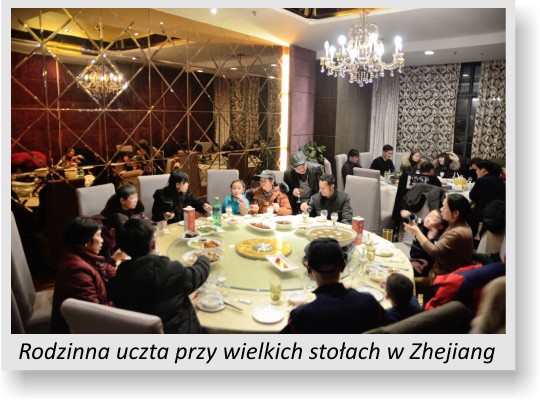 More and more often, large family feasts are organised in restaurants and hotels. The cost of such an event is usually around 1,200–2,000 RMB per table for 8–10 people, which equals approximately 60–100 PLN per person. However, there are also places where these amounts can be three times higher. Chinese people enjoy good food, but above all they love spending time with family and friends. Such feasts can last 3–4 hours and begin with green or jasmine tea, followed by cold dishes such as slices of beef, spicy peanuts, tofu or tongue. The most important part, however, is the main courses, which always have symbolic meaning: fish represents abundance and prosperity, dumplings shaped like traditional gold ingots symbolise wealth, and chicken represents unity and prosperity. There are also unusual dishes, such as turtles, which obviously symbolise a long life. The dishes and methods of preparation differ between provinces and even between families (depending on the origins of grandparents and great-grandparents). Food is prepared in many different ways, and there are no specific dishes that must appear on the table — unlike, for example, our Christmas borscht with dumplings or bigos.
The most important Chinese New Year tradition, common throughout the entire country, is of course giving red envelopes containing money. It is a symbolic wish of prosperity and happiness for the recipient. The rules vary greatly; most often parents give envelopes to children, married couples to engaged partners, older brothers to younger brothers, and working grandchildren give money to their grandparents and great-grandparents. "Oh no! We could have given them 500 yuan more each" — said Liu Li when she opened the envelopes that her children had received from their aunt. Counting and exchanging envelopes, sometimes ending with playful arguments, resembles a real comedy show. The funniest thing is that the envelopes are small, and the highest Chinese banknote has a value of only 100 RMB (around 50 PLN). Therefore, when someone gives 2,000–3,000 RMB, the envelope becomes truly stuffed and almost bursts at the seams.
Unfortunately, the joy of this holiday was spoiled by a new virus that appeared in the city of Wuhan. The virus resembles severe pneumonia, and this time (unlike SARS) the Chinese authorities publicised the problem quite strongly. The disease originated from animals, possibly bats. Apparently, the Chinese authorities fear a serious pandemic during Chinese New Year — citizens of the country will travel throughout the Middle Kingdom, across Asia, and many will also appear on other continents. We can only hope that the virus will be quickly contained and will not cause mass infections throughout China or the world.
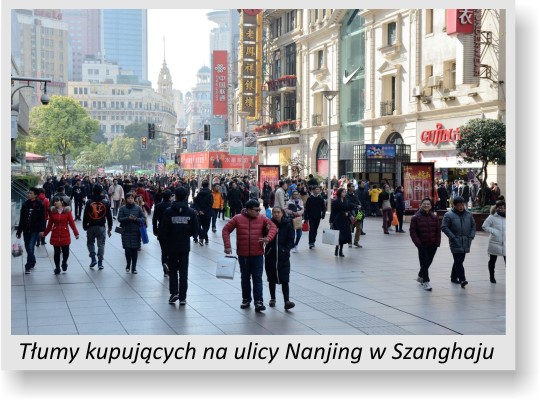 It is also worth mentioning that Chinese holidays have a significant impact on the global economy. It happens that some factories, for example in the Shanghai region, which employ workers from Hubei Province, have to stop production for a month. Many factories suspend production for 3–4 weeks because workers deserve rest during this most important period and need time to travel back to their hometowns. Office employees, customer service workers and logistics companies usually have 7–10 days off. Retail, however, flourishes during this period and certainly gives a huge boost to the Chinese economy. Chinese people receive red envelopes, which become larger every year, and this is an excellent time to spend that money. Famous shopping areas such as ShanXiaJiu in Guangzhou, Nanjing Road in Shanghai or Dongmen in Shenzhen become completely overcrowded. Crowds of shoppers buy everything: clothes, jewellery, watches and toys. Entire families also spend time in bars and restaurants. According to estimates, during the holiday season in 2019, retail and restaurant sales reached almost 149 billion dollars, although this result was 3.9% lower than in 2018.
Unfortunately, China's trading partners around the world eagerly wait for a return to normality. Container transport before Chinese New Year becomes significantly more expensive, sometimes by 400–500 USD per container. There is a shortage of drivers and trucks, factories stop accepting new orders or extend production times to even two months. Shipping companies hope for additional profits by offering faster rail and air transport — there is no time, and goods must be collected before Chinese companies close for a longer period. Sometimes Polish importers fear they are being cheated because a Chinese supplier has been silent for several days — when in reality it is simply the most important holiday in China.
If you are interested in quoting my words, or would like
to republish or print my texts, please contact me using the form below.
contact form.
Comment:
No comments to display.